
Artificial Intelligence disrupts the creative world
Now when Artificial Intelligence is in the world, where can we find the fun associated with Human creativity?

8 min read
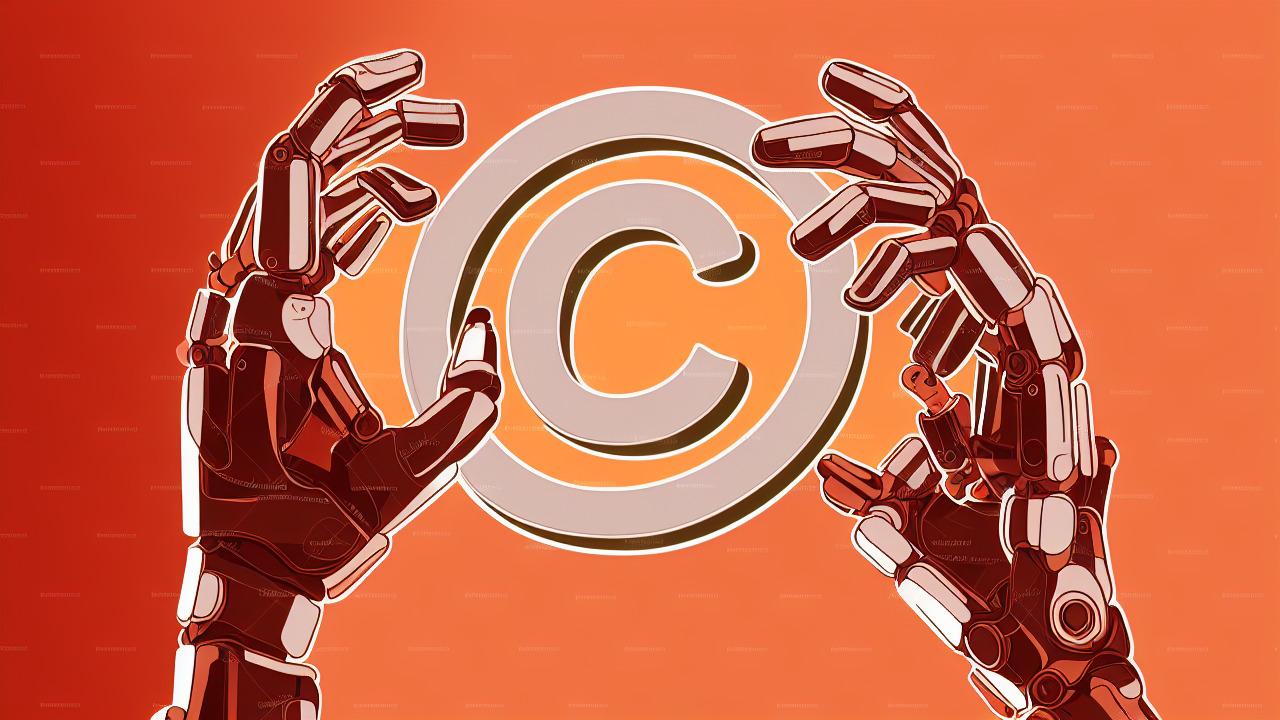
The world-renowned theoretical physicist Albert Einstein once said," Creativity is intelligence having fun." So, now that Artificial Intelligence is in the world, where can we find the fun associated with Human creativity?
With the commencement of Artificial Intelligence as a transformative force across several industries, it is changing the paradigm of handling data and creating final projects out of it.
Before we further delve into the matter, let us unravel the story of how it all began:
History of Artificial Intelligence
In 1936, Alan Turing, the British mathematician later known for helping break Germany's Enigma code during World War II, described a 'universal machine' that could read and follow instructions stored in its memory. The idea laid the groundwork for the first digital computers.
In 1955, computer scientist John McCarthy coined the term 'artificial intelligence' in a proposal for a summer research workshop at Dartmouth College, held in 1956. In 1958, he created LISP, which became the main programming language of AI research for decades. He later founded the Stanford Artificial Intelligence Laboratory.
Taking forward what began in the 1950s, several researchers began working diligently on the holistic development of several modules of Artificial Intelligence, trying to make it more functional with minute success every year.
Notably, the late 1990s and early 2000s can be counted as a watershed moment in the research and development in the field of AI. There was remarkable success in machine learning algorithms, data availability, and computational power. In the contemporary period, AI has made its entry into almost every industry, such as automation, robotics, space science, food processing and packaging, education, hospitality, agriculture, sports, and manufacturing, and the list is inexhaustible.
The transformative force of AI has also marked its presence in the realm of Art, which leaves three questions that we will try to answer through this article:
1. Who will own the final artwork's Copyright, once an artist completes a project with the help of an AI tool, which is called Generative AI
2. Is it fine for generative AI to trespass on a zillion artworks available online and come up with a blend of all those copyrighted works unethically, just to present something for your master?
3. Is Generative AI a copycat or a creative genius?
Even the legal corridor is finding it hard to answer these questions as the legislatures that had made laws over copyright had never envisaged that there would be any such thing to replace humans at work by doing their artwork. Isn't it funny that we ourselves are making our lives complicated in the name of technological advancements and seeking comfort?
Before we go ahead, let’s understand what AI stands for and how it is affecting our everyday lives.
Artificial Intelligence refers to a technological advancement wherein computers perform tasks like humans do by following learned algorithms and knowledge from humans. The Artificial Intelligence is a transformative force that has changed the way we perceive computers, automation, and the future of technology. Artificial Intelligence can be defined in a nutshell that It's a simulation of human intelligence in the shape of a machine that can do everything that a human is capable of, like thinking, learning, solving problems, and even presenting creative ideas.
In Machine Learning, there is a need to develop models by training them with some algorithms to make predictions or decisions based on data. This lets a computer improve at a task without being explicitly programmed for every step.
Deep learning, a subset of machine learning, uses many layers of artificial neurons, loosely modelled on the human brain. Because it can learn directly from raw data with less manual setup, it allows machine learning at a much larger scale.
Scope of AI-generated artwork in the field of Copyright
Can a computer software or tool, which is manned by its controller can be given Copyright over something, they cumulatively worked together with the help of Artificial Intelligence? Before we unfold the legality around AI-generated artwork, let me define what it is
With every other YouTube channel using AI-generated graphics to present their informative videos, there will be a time when one channel will blame another for copying their artwork, as they have already shown the artwork on their channel. Is it possible for a graphic designer who has used AI-generated artwork to depict someone in their video or on their running content metadata image to claim that it is their Intellectual Property that nobody can copy without their permission? So, it directly raises the question:
Can an AI-generated artwork be protected under copyright law?
To address the issue, we need to understand the objective of the Copyright Law in the first place. At the time, when the Copyright Law was framed, the legislature never thought of a day when Machines like Computers could be so capable of drawing something of their own without taking human aid. The definition of copyright includes mainly Literary, Dramatic, Musical, Artistic, Cinematographic, and Sound recording works. All works that by the time the law was framed, were only exercises of human beings, so there were not many issues regarding computer autonomy, which is now trying to evade humans' space with its cyberspace.
The principle that copyright belongs to humans was tested in the 'monkey selfie' case, Naruto v. Slater. In 2011, British photographer David Slater set up his camera in an Indonesian forest, and a crested macaque named Naruto took a series of selfies with it. When the photos went viral, Slater claimed copyright over them. In 2015, the animal-rights group PETA sued him on Naruto's behalf, arguing that the monkey was the author. In 2018, a US federal appeals court ruled that animals cannot sue for copyright infringement under US law. The US Copyright Office had already said in 2014 that it would not register works produced by animals.
Now, coming to the topic of whether an AI-generated image will amount to copyright protection or not?
The rule is simple in countries like the US and India: AI-generated content is not automatically protected. Only works with a significant level of human creativity backed up with originality deserve to get copyright protection; otherwise, AI-generated content falls short of such criteria.
However, an author who has substantially edited, reshaped, and retouched AI-generated content, making it their own original work, can qualify for copyright protection.
Legal provisions in India
In India, the Copyright Act, 1957, protects original literary, dramatic, musical and artistic works, cinematograph films and sound recordings. Section 2(d) defines who the author is, and for a computer-generated work, it names 'the person who causes the work to be created'. The Act does not say whether that can be the AI itself, and the Copyright Office has so far treated authorship as human.
Now, when dealing with an AI-generated work, unless the creator of the work puts substantial creativity and effort into transforming it into the most humanistic form, there cannot be authorship available for the artwork.
Relevant cases
The RAGHAV application
Ankit Sahni applied to register 'SURYAST', an artwork made with his AI tool RAGHAV, naming RAGHAV as a co-author. The Indian Copyright Office first registered the work, then issued a notice seeking to withdraw the registration, questioning whether an AI can be an author. The US Copyright Office refused to register the same work in December 2023 for lack of human authorship. No Indian court has yet ruled on whether an AI system can be an author.
ANI v OpenAI
In November 2024, news agency ANI sued OpenAI in the Delhi High Court, alleging it used ANI's news stories to train ChatGPT without permission. On July 24, 2026, the court refused ANI's request for an interim injunction. Its preliminary view was that training on the articles was likely 'fair dealing' under Section 52 of the Copyright Act, and that ANI had not shown that ChatGPT reproduced its articles. The main case is still pending. Separately, in December 2025, a committee set up by the Department for Promotion of Industry and Internal Trade (DPIIT) proposed a mandatory blanket licence that would let AI developers train on copyrighted works while paying royalties to creators once their AI is commercialised. It is a proposal, not yet law.
One more concern: Exploitation of singers and actors at the hands of Producers
Lately, it has been witnessed with several complaints about copying of artworks and infringement of copyrighted artworks, which is becoming a nuisance in the field of intellectual property. Producers who happen to be the authors of cinematographic and audio records are exploiting artists’ voices to create whole songs with voice samples by using AI tools. Now the question arises: these technological advancements sound amazing in terms of science and technology, but at what cost? In 2024, video game performers in the US protested outside Warner Bros. studios against the unregulated use of AI to copy their voices and likenesses.
Such pseudo-cheap tactics of cost-cutting resorted to by the producers can leave a long-term scar on the subconscious psyche of a budding artist, and they also start putting less effort into finding their best version as an artist.
Such a transformation of Artificial Intelligence in the field of movie-making is making news across the globe. Artists from all walks of creative work have raised their concerns regarding such a contemporary trend of recreating works for the sake of entertainment, but again, at what cost?
Sources
- Science News Todaysciencenewstoday.org
- IBMibm.com
- The Hinduthehindu.com
- Mediummedium.com
- Maheswari blogmaheshwariandco.com
- US Copyright Office decisioncopyright.gov
- Live Lawlivelaw.in
- Storyboard.instoryboard18.com
Enjoyed this? Get new stories in your inbox.
One email on Mondays with the week's new stories. Free, and one click to unsubscribe.
About the writer

Legal Journalist
Kumar Abhinav is a New Delhi–based legal journalist specializing in legal reporting, intellectual property rights, and public policy. A law graduate from the University of Delhi with experience spanning leading news organizations and policy research institutions, he covers the decisions, legislation, and legal trends shaping society.
Writes about Journalism, Politics, Lifestyle, Opinion