

Police Reforms Remain a Far Cry in India
20 Years After the Supreme Court's Historic Verdict

8 min read
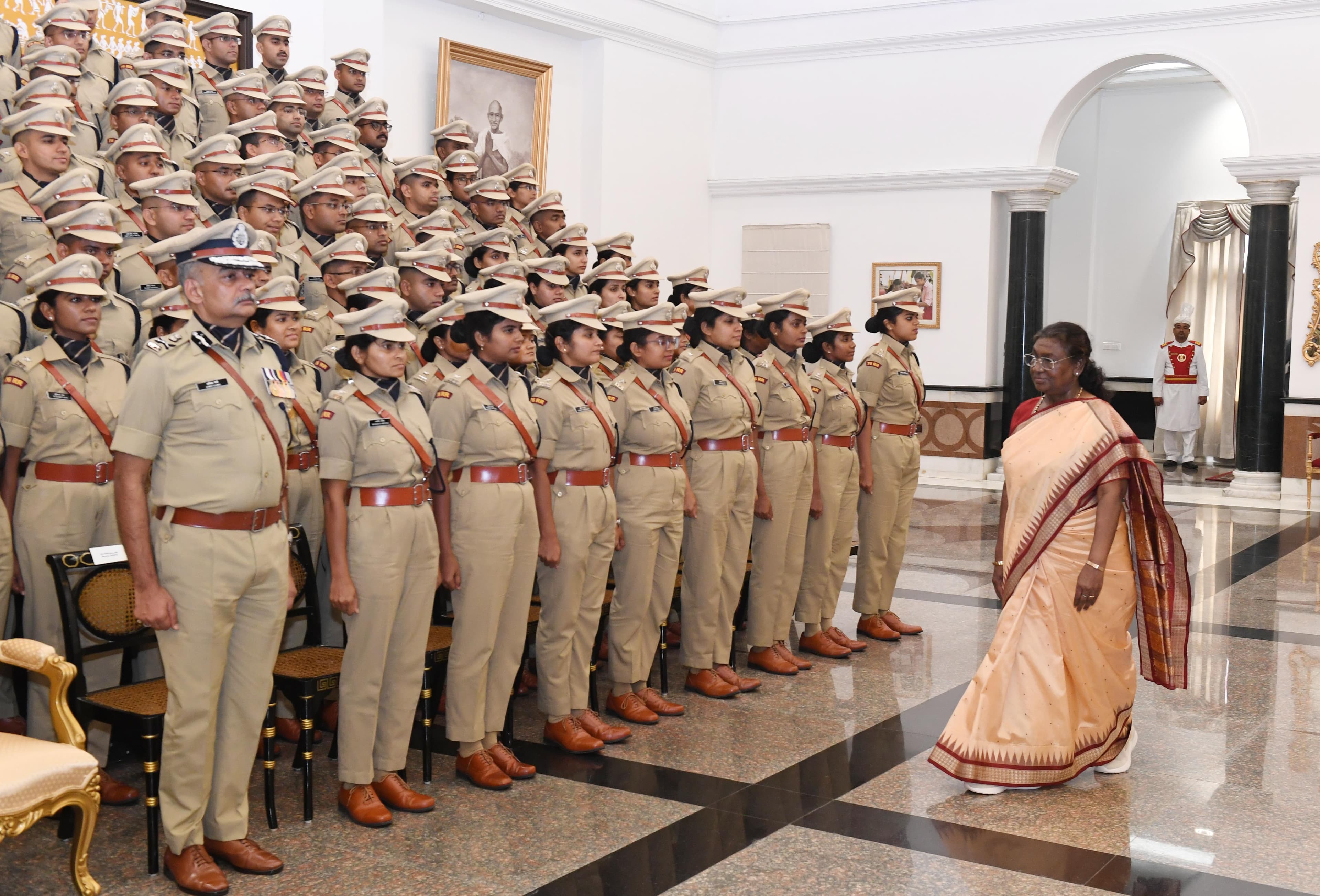
Police reforms have been on the agenda of the Indian Governments since independence, but the police is seen as selectively efficient, unsympathetic to the underprivileged. It is further accused of politicization and criminalization. In this regard, one needs to note that the basic framework for policing in India was made way back in 1861, with little changes thereafter, whereas the society has undergone dramatic changes, especially in the post independence times.
The public expectations from police have multiplied and newer forms of crime have surfaced. The policing system needs to be reformed to be in tune with present day scenario and upgraded to effectively deal with the crime and criminals, uphold human rights and safeguard the legitimate interests of one and all.
Even after eight decades of Independence, India's police system continues to operate under the framework established by the regulations created by British rulers to form a force that was "politically useful" for their colonial administration. Neither the political parties nor the governments that have ruled the country have made any significant effort to establish a police system suited to the needs of an independent nation.
Former DGP Prakash Singh’s solitary legal battle
Former Punjab DGP Prakash Singh waged a solitary battle on this issue and approached the Supreme Court in 1996 and fought a legal battle for ten years, eventually paving the way for historic "police reforms" verdict on September 22, 2006. However, even after 20 years, there have been no substantial efforts toward their implementation, save for a few token measures here and there.
Despite the Supreme Court's historic directives in Prakash Singh v. Union of India (2006), which mandated the creation of State Security Commissions and fixed tenures for Directors-General of Police (DGPs), most states have bypassed or diluted these guidelines through executive ordinances, leaving officers vulnerable to political victimisation.
The colonial-era policing model—rooted in the 1861 Police Act—remains in force today. Police reform is not a priority in the election manifestos of any political party. The structural design of Indian policing grants the executive political branch extensive powers of superintendence and control, which is frequently misused. State governments exercise arbitrary control over transfers, postings, and investigative pathways, compromising institutional neutrality.
Recognizing the dangers inherent in the unfettered powers wielded by the police during the Emergency, the Janata Party government took some initiative to address this issue. The Justice Shah Commission, constituted to probe the excesses committed during the Emergency, made strong recommendations—for the first time—regarding necessary changes to the police system, explicitly calling for their liberation from political pressure.
Witnessing how the Indira Gandhi government had curtailed fundamental rights—creating a situation where the Attorney General Niren De told the Supreme Court in the ADM Jabalpur case (1976) that courts could not question the government even if it shot and killed an individual —the Morarji Desai government established the National Police Commission, headed by retired ICS officer Dharma Vira, to reform the police system.
The Commission submitted eight comprehensive reports between 1979 and 1981 on police reforms. However, the Morarji Desai government had already fallen by then, and subsequent governments ignored the reports. Meanwhile, the entire nation was shocked when the police played the role of mere spectators during the horrific massacre of Sikhs in Delhi following Indira Gandhi's assassination in 1984.
Supreme Court's seven directives
Against this backdrop, the apex court gave its nearly revolutionary directions in 2006, a decade after Prakash Singh first filed his petition. The states and union territories were directed to comply with seven binding directives that would kick-start reform. Furthermore, the Court announced that it would directly oversee their implementation.
Immediately thereafter, the Central Government convened a high-level meeting with the Home Ministers and Directors General of Police (DGPs) of the states. However, subsequent events make it clear that the discussions in this meeting focused not on how to implement the police reforms suggested by the Supreme Court, but rather on how to dilute the spirit of those reforms.
Since policing falls under the jurisdiction of the states, the Supreme Court directed state governments to enact specific police laws to implement the reforms, clarifying that its recommendations would remain in force until such laws were enacted.
After this, 17 states have passed legislation but these were mainly to circumvent the directives but not to implement them. Till today, the government has not shown its commitment to follow the directives of the court in true letter and spirit.
“Nobody listens to our orders,” the Supreme Court observed on March 1, 2017, while refusing to accord urgent hearing to a plea seeking massive reforms in police force across the country. “Police reforms are going on and on. Nobody listens to our orders,” a bench headed by Chief Justice J S Khehar lamented while declining the request for urgent hearing on the plea filed by Ashwini Kumar Upadhyay, lawyer and Delhi BJP spokesperson.
Local police stations combine law-and-order duties with criminal investigations, meaning detectives are frequently pulled away for VIP security, festival management, or protest control. To enhance criminal investigation standards of the force, the Apex Court had directed the separation of law and order functions from crime investigation wings. Implementing this recommendation would not in any way infringe upon the powers of state governments. Nevertheless, it remains unimplemented, with a lack of adequate staff cited as the excuse.
In particular, the recommendation that DGP appointments be conducted through the UPSC is largely being undermined. States frequently rely on 'in-charge' DGPs for extended periods. Although the process allows Chief Ministers to select one individual from a shortlist of three candidates—chosen from a pool of five or six proposed by the state government—state governments show little interest in appointing DGPs based on seniority and merit.
The Supreme Court had suggested the establishment of three specific systems. Although it was recommended that a state-level security commission be established with half its members drawn from civil society, appointments are instead being made from among ruling party supporters. While the Supreme Court has mandated the strict implementation of the commission's recommendations, state governments are limiting its role to merely offering advice.
Furthermore, state governments are showing little interest in establishing Police Establishment Boards or Police Complaints Authorities. Leaving implementation aside, states like Andhra Pradesh, Arunachal Pradesh, Karnataka, and Goa have made some progress in enacting comprehensive legislation. In contrast, states such as Bihar, Himachal Pradesh, Maharashtra, Telangana, and Uttar Pradesh are lagging significantly in this regard.
Acute shortage of personnel
The police system, in particular, is grappling with an acute shortage of personnel; staffing levels and technological capabilities are failing to keep pace with escalating law-and-order challenges and the evolving nature of crime. The Parliamentary Standing Committee on the Ministry of Home Affairs, headed by Congress leader Anand Sharma, in its report tabled in Parliament, noted that there were 5,31,737 vacancies as on January 1, 2020 against the sanctioned strength of 26,23,225 in the state police forces, about 20 per cent shortfall. Prakash Singh said in a recent webinar that present vacancies are 5.92 lakh and that if growing requirements are taken into account, the figure could rise to 10 lakh.
The perception that policing is a round-the-clock job leaves officers with no leisure time and no opportunity to attend to their families. Prakash Singh expressed concern that while there are individuals and civil society organizations in the country advocating for the human rights of terrorists and hardened criminals, there is no one to champion the rights of the police.
Furthermore, they often lack access to training that keeps pace with changing circumstances, nor do they have adequate access to modern technology. In many instances, terrorists and hardened criminals stay ahead of the police in acquiring state-of-the-art technology.
"Police reforms will never be implemented in India. In the current Lok Sabha, 46.1 percent of the members have criminal cases, and this percentage continues to rise with every election. Regardless of party affiliation, do you think these individuals facing criminal cases would ever agree to grant autonomy to the Indian police system?" This question was raised by an IPS officer who retired with the rank of DGP in the erstwhile united Andhra Pradesh.
Politicians always desire to keep the police force under their control; furthermore, they seek to utilize the police much like the 'lathi-wielding goons' employed by feudal landlords of the past. This is precisely why police reforms are not being prioritized. Even the Supreme Court, which initially monitored the implementation of police reforms through frequent reviews, has paid little attention to the matter over the past six years.
Even prominent lawyers, who frequently raised this issue in the Supreme Court to draw the judges' attention—no longer show interest in it. Therefore, civil society and individual citizens must take an active interest in the implementation of police reforms, rather than leaving the matter entirely to the Supreme Court. Only then will circumstances arise that compel governments to focus on this issue. After all, couldn't petitions also be filed in State High Courts seeking the implementation of the Supreme Court's directives?
Sources
- Supreme Court's 2006 Prakash Singh judgementnarcoticsindia.nic.in
- National Police Commission reportsthehinducentre.com
- Supreme Court's March 2017 "Nobody listens to our orders" remarkeconomictimes.indiatimes.com
- 46 percent of MPs with criminal casesadrindia.org
- The 2006 Supreme Court ruling on police reformsindianexpress.com
- 5.3 lakh police posts lying vacanttheprint.in
About the writer

Freelance Journalist
A journalist by profession, worked with New Indian Express Group for a long time, besides some other media organizations, based in Hyderabad, presently a freelance journalist.
Writes about Journalism, Business, Politics, Education