
“Let Me Just Check With AI First”
When a tool makes something easier, what happens to the part of ourselves we no longer have to exercise?
8 min read
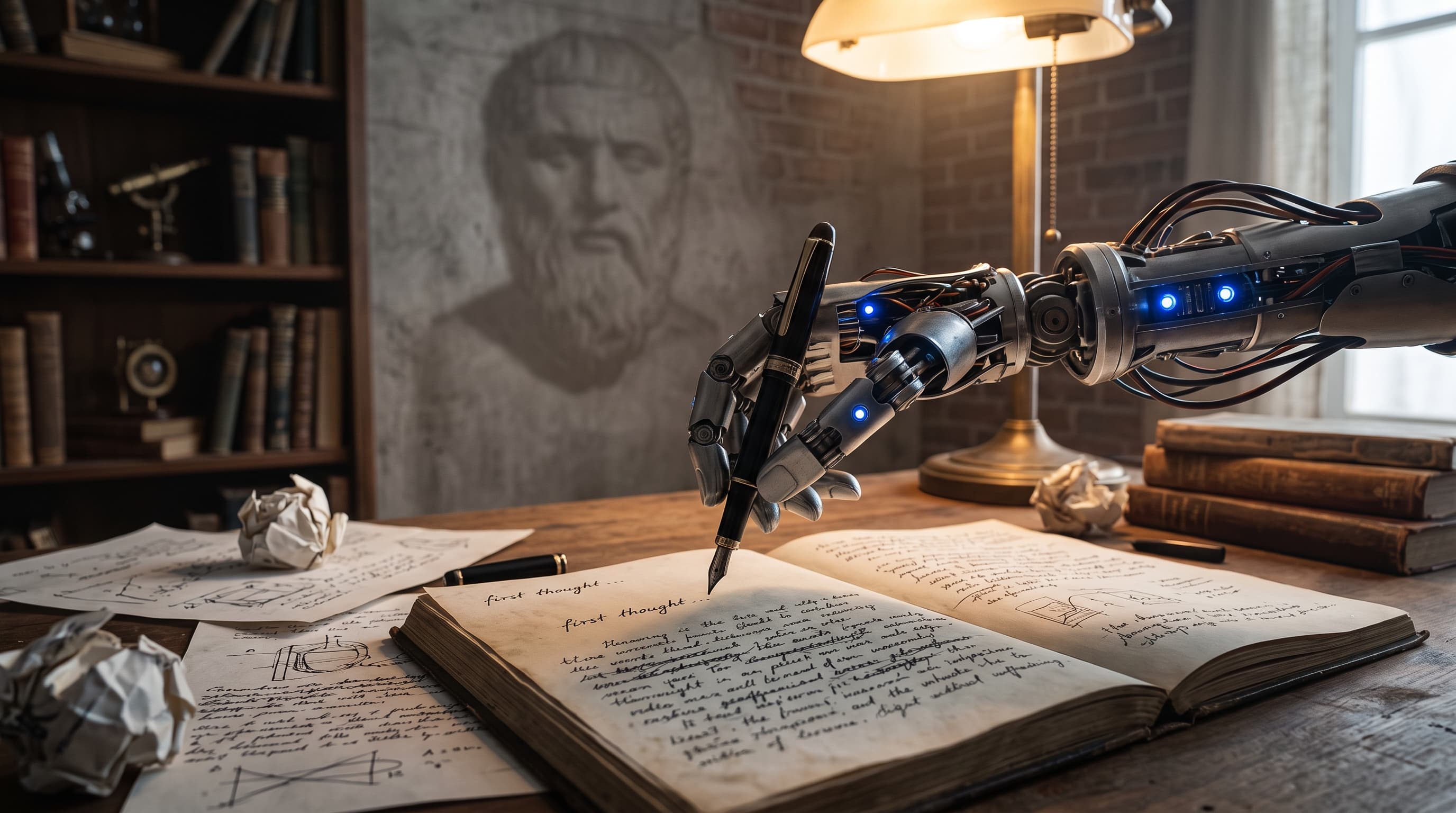
I used to write about everything: experiences, reflections, random thoughts that showed up uninvited at 2 a.m. Then AI arrived, and I went quiet for three years straight. It wasn’t that I had run out of things to say, but somehow, I could no longer convince myself that what I had to say was good enough.
I wanted my writing to be flawless and thoughtful enough to stand next to a machine that could produce a decent paragraph in seconds. I called it "having high standards". It took me a long time to admit that actually it was fear with better branding. I was scared that my words would sound stupid, my ideas would feel ordinary, and people would read my writing and wonder why I had bothered publishing it in the first place.
The loop nobody warns you about
At first, I was genuinely fascinated by AI. It was fast, articulate, and sometimes sounded like a wise old gentleman who had spent his entire life contemplating the meaning of existence. Naturally, I started asking it to review my writing before I posted anything, then to give me feedback on my ideas, until eventually, I couldn't remember the last time I trusted myself to produce something without asking for a second opinion from a tool without a soul. The “let me just check with AI first” had become a reflex I didn’t question.
The cycle was always the same: generate a draft, feel that it’s not quite what I meant, ask for a revision, get another near miss, and end up irritated at a software for not reading my mind. Somewhere in that loop, I stopped being able to start a piece at all. I started to believe my writing was bad unless AI had touched it.
The more uncomfortable part was what happened outside the writing process. I started doubting my ability to find the right words, organize my thoughts, and decide whether an idea was worth exploring in the first place. Somewhere along the way, AI had become more than a writing assistant. It had become the thing I consulted to decide whether my own thoughts were worth anything at all.
When did I start needing permission to trust myself?
To be fair, I don't think AI invented my perfectionism. My all-or-nothing mindset was already there, waiting for another reason to tell me not to publish until everything was perfect. But AI gave that mindset a new benchmark, one I could never realistically meet. How was I supposed to feel good about my first draft when a machine could produce something more polished before I'd even figured out my opening sentence?
And I think this is where my problem stopped being just about writing. I had started treating the quality of my output as evidence of my own worth, and AI kept giving me reasons to question it. If a machine could write better, think faster, and organize ideas more neatly, what did that say about me? I knew, logically, that humans weren't supposed to compete with machines at being machines. But sadly, knowing something intellectually doesn't stop me from feeling inadequate.
Maybe that's why writing felt so difficult without AI. Maybe I hadn't lost the ability to write. Maybe I'd simply stopped trusting myself to use it, and mistaken that lack of confidence for a lack of ability. I had started treating my own mind as an unreliable first draft that needed external approval.
Maybe the struggle was part of the point
This made me think about something I used to take for granted: writing was never just a way to record thoughts I already had. Often, writing was how I discovered what I thought in the first place. I'd begin with a vague feeling, write a terrible paragraph, contradict myself somewhere in the middle, and only then realize what I was actually trying to say. The struggle was part of the process, not a sign that I was doing something wrong.
There's an old debate about this in Plato's Phaedrus. When the Egyptian god Theuth presents writing as an invention that could improve memory and wisdom, King Thamus argues that relying on written records might weaken people's ability to remember for themselves, giving them the appearance of knowledge without the same depth of understanding. Writing eventually became one of humanity's most important tools, of course. But the question underneath his criticism still interests me, and it applies to AI just as well: when a tool makes something easier, what happens to the part of ourselves we no longer have to exercise?
It would be a strange conclusion to say that we should reject tools that make life easier. But I do wonder whether, in our rush to keep up with a world that moves faster every day, we sometimes mistake doing things faster for becoming more capable. We want to save time, reduce friction, and get better results, yet we rarely stop to ask whether the effort we're removing is also where we're supposed to learn something.
And maybe that is what scares me most about my own experience. I don't want to wake up one day surrounded by tools that can help me do almost anything, only to find that I no longer trust myself to do anything without them. I don't want convenience to quietly become dependence, or assistance to become the condition I need before I can believe in myself.
I want to trust the person behind the work
Here's something I eventually realized: even when AI produced a draft I couldn't quite explain why I disliked, I could still tell that something was off.
I could feel when the words didn't match my experience, when an argument missed the point, or when a sentence sounded impressive without saying what I actually meant. That little feeling of "no, not quite" was easy to dismiss, but it was evidence that my judgment hadn't disappeared. I had simply become better at questioning it than listening to it.
I want to learn to trust that judgment again. I want to write the messy first draft, sit with an idea that hasn't fully come together, and choose my own opening sentence before asking a machine to suggest ten better ones. I can still use AI to challenge my reasoning, catch mistakes, or help me see a perspective I've missed, but I want to meet my own thoughts first. I want AI to help me develop my voice, not become the voice I trust more than my own.
More than anything, I want to stop treating my productivity as proof of my worth. I am allowed to take longer to understand something, to need practice before I become good at it, and to make things that aren't immediately impressive. I should always remember that my value doesn't disappear because someone, or something, can do a particular task faster or more flawlessly than I can. And I don't always have to be the best at everything I do for the things I make to deserve a place in the world.
I think part of being human is having the freedom to choose our own pace, even when everything around us tells us to hurry. We can use the tools available to us without surrendering every decision to them. We can learn from something more efficient than ourselves without making efficiency the measure of our lives.
There is still something meaningful about doing a thing because we want to learn it, because it matters to us, or simply because we want to see what we're capable of. After three years of hesitating, I'd rather publish something that sounds like me than keep waiting for something flawless enough to make me feel worthy of being heard.
If you’ve been feeling smaller since AI arrived, maybe you know what I mean. Maybe you’ve started questioning a skill you used to enjoy, or wondering whether your own work matters when a machine can produce something similar in seconds. I don’t have a perfect answer for that feeling, but I think we can start by refusing to let the things we create become the only measure of what we’re worth.
The world is moving fast, and we feel the urge to keep up, so we grab whatever accelerates us. That’s understandable. But speed was never what made us valuable in the first place. We don’t have to turn every part of being human into something to optimize, and we get to choose our own pace.
And, my friend, we’re not behind. We’re not less intelligent just because AI arrived. Look at your hands. They don’t have to produce something extraordinary every day to be worth something, and they don’t have to compete with a machine to make something meaningful.
So I’m starting here, with this imperfect piece. I don’t know if every sentence works, and I’m resisting the urge to keep polishing it until I no longer recognize myself in it. I want my confidence back, but I know I can’t get it by wishing for it. I have to practice trusting myself again, one imperfect attempt at a time. And if writing is how I find my way back, then I guess it’s time I started writing again!
I’ve spent so long wondering whether my words are good enough that I almost forgot what it felt like to write simply because I had something to say. I want to find that feeling again.
About the writer
Creative Writer
I'm a creative writer drawn to the little things that make us human. I enjoy writing reflective essays about navigating our 20s and exploring everyday psychology through relatable, Gen Z perspectives. I'm especially interested in the thoughts, feelings, and experiences we often struggle to put into words. Through my writing, I hope to make sense of life's messy in-between moments and create stories that help people feel a little more understood.
Writes about Lifestyle, Opinion, Research, Culture