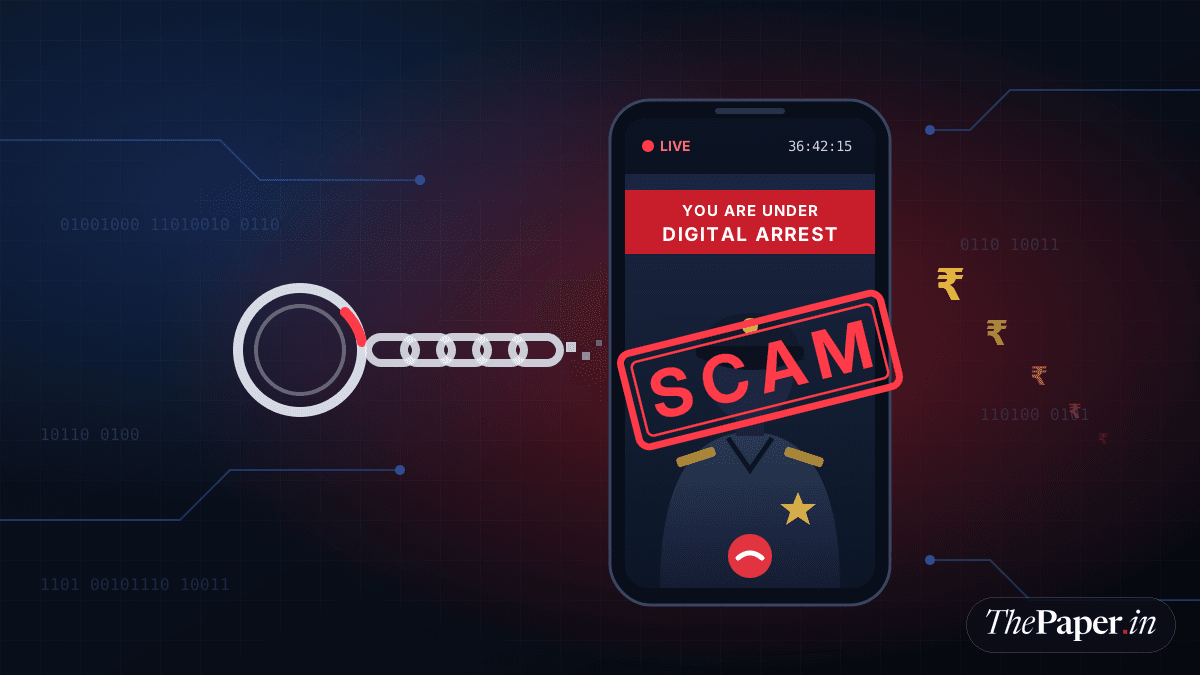

Fabricated
A short story: when artificial intelligence becomes a weapon of blackmail

4 min read
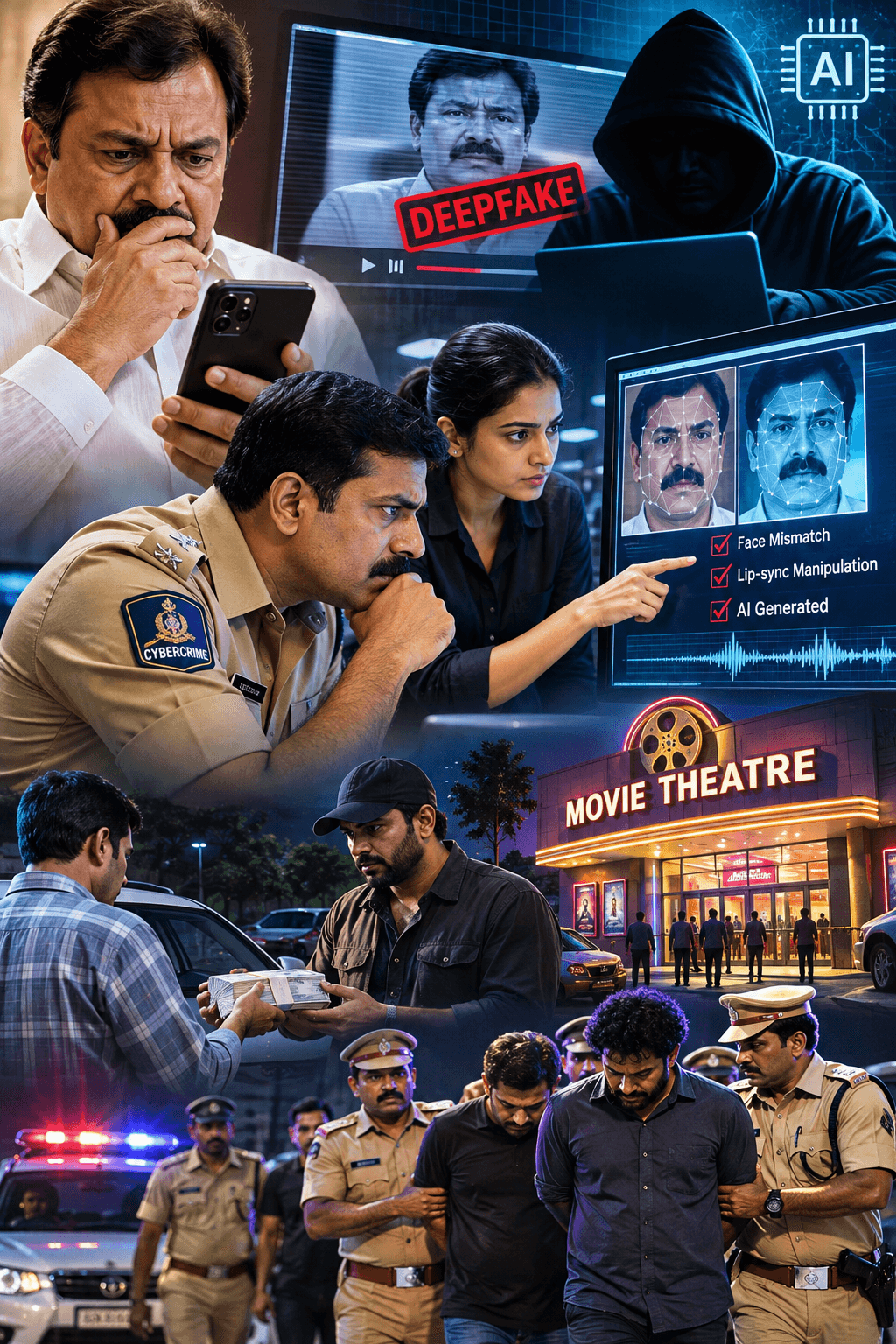
At 11:47 p.m., legislator Vikram Saran received a video on his mobile phone. Within seconds, his hands began trembling.
The man in the video had his face, his voice and even his characteristic mannerisms. But the objectionable acts depicted in it were something he had never committed.
A disturbing message followed.
“Five crore rupees. Otherwise, the entire country will watch this video tomorrow.”
Fearing irreparable damage to his reputation, Vikram negotiated with the blackmailers and paid an initial instalment of five lakh rupees. However, when they demanded another five lakh and threatened his family, he approached the police.
Cybercrime Inspector Aditya Rao and his assistant, Nisha, took charge of the investigation.
“It's not me in that video. But who will believe me?” Vikram asked desperately.
“Let the evidence establish the truth,” Aditya assured him.
The forensic team examined the video file received by Vikram. Frame-by-frame analysis revealed inconsistencies in facial movements, lighting, reflections and lip synchronisation.
After examining numerous recordings of Vikram, Nisha discovered striking similarities between the fabricated video and a television interview he had given six months earlier. Further forensic examination strengthened their suspicion that artificial intelligence had been used to manufacture the video.
Meanwhile, Aditya instructed Vikram to continue negotiations with the blackmailers under police supervision.
The investigators meticulously preserved the threatening messages, call records and digital files. One particular message contained a cloud storage link through which the gang had initially shared the video.
Through lawful requests to the service providers, the investigators obtained account registration details and login records. A recovery mobile number associated with the cloud account provided their first significant breakthrough.
The number was registered in the name of a freelance video editor named Rohan.
Instead of arresting him immediately, Aditya placed him under surveillance, hoping to identify his associates.
Two days later, the blackmailers agreed to collect the second instalment at a movie theatre in a nearby small town. They instructed Vikram to send his personal assistant with the cash during the evening show.
Aditya deployed plainclothes policemen around the theatre. Nisha stationed herself near the ticket counter, posing as a moviegoer.
At around 8 p.m., Rohan arrived with four associates. While two remained outside, the others approached Vikram's personal assistant in the parking area.
The moment they accepted the cash, Aditya signalled his team. Before the gang could escape, the policemen surrounded them.
All five were arrested. Their mobile phones were seized, and a subsequent search of Rohan's residence yielded two laptops and several storage devices.
Forensic examination uncovered numerous fabricated videos featuring businessmen, celebrities and other prominent personalities. Recovered conversations indicated that someone was regularly supplying the gang with confidential information about its victims.
But the mastermind's identity remained a mystery.
While examining the files, Nisha discovered an unedited audio recording of Vikram rehearsing a confidential speech.
Aditya immediately contacted him.
“Who had access to this recording?”
“Only my digital media consultant, Karthik. He recorded it himself,” Vikram replied.
Investigators examined communication records and financial transactions involving Karthik and Rohan. Several suspicious payments and recovered conversations established their involvement in the extortion racket.
Armed with the evidence, the police searched Karthik's residence. His computer contained original recordings, deepfake project files, extortion plans and a confidential list of prospective victims.
The evidence exposed a sinister double game.
Karthik had been supplying the gang with sensitive information about wealthy clients who trusted him with their digital reputation. After engineering threats against them, he offered expensive reputation management services while secretly claiming a share of the extortion money.
Confronted with compelling digital evidence, Karthik finally confessed.
“Artificial intelligence made everything possible,” he muttered.
Aditya handcuffed him.
“Artificial intelligence may have manufactured those lies, Karthik. But it was human intelligence that exposed them.”
Following the arrests, Aditya issued a public advisory urging victims of deepfake blackmail to preserve digital evidence and immediately approach the police.
His concluding words carried a powerful warning.
“Yesterday, criminals concealed the truth. Today, they manufacture it. In the digital age, verification is our strongest defence.”
Disclaimer: This is a work of fiction inspired by news reports of a deepfake blackmail case in Hyderabad in November 2026. All characters, dialogue and investigative events, including the identity of the mastermind, are invented and do not describe the real case or anyone involved in it.
Sources
- TV9 Telugu: Hyderabad deepfake blackmail casetv9telugu.com
Enjoyed this? Get new stories in your inbox.
One email on Mondays with the week's new stories. Free, and one click to unsubscribe.
About the writer

Technology Journalist
An engineering graduate, prolific reader and passionate writer, I have penned over 4,000 articles, letters, stories and novels in English and Telugu. I love exploring new fields and continually expanding my knowledge.
Writes about Journalism, Science, Environment, Opinion