
Is My Name on the List? How Young Indians Are Shaping the SIR Debate
As the Election Commission revises voter rolls nationwide, students are protesting, volunteering and registering in large numbers. Here’s what’s driving them.

5 min read
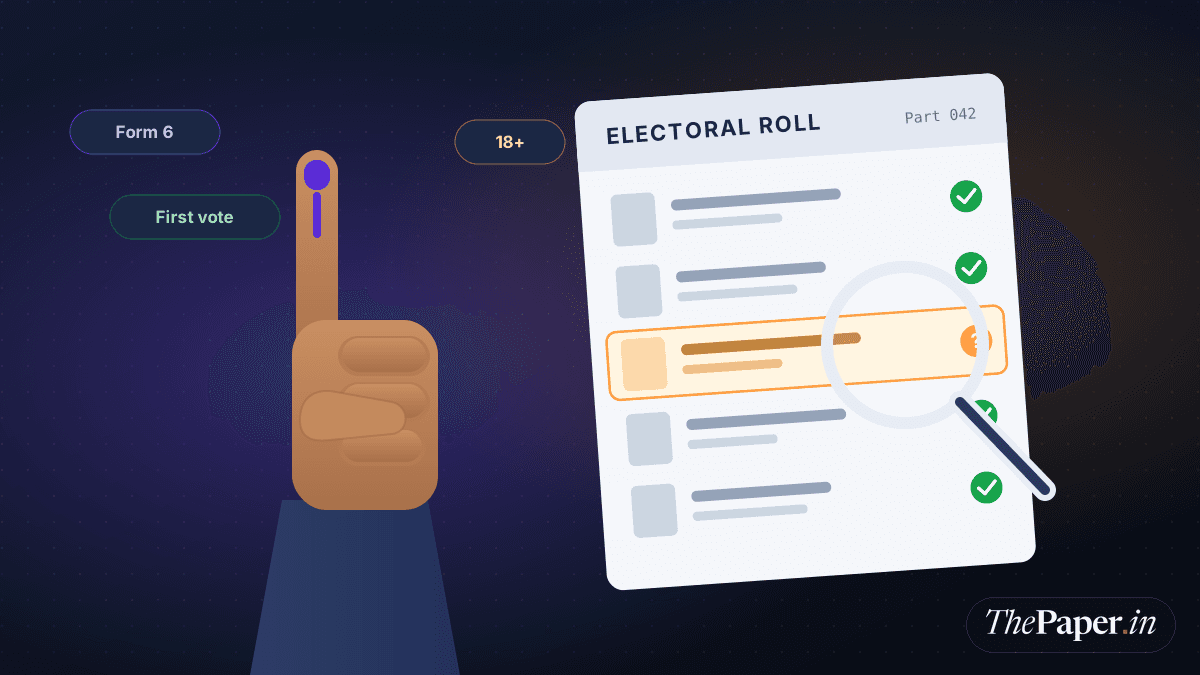
For most young Indians, the voter list used to be something you dealt with once: fill in Form 6 at 18, collect your voter ID, and forget about it. In 2026, it has become something they argue about in college canteens, explain to their parents and, for some, protest over on the streets.
The reason is the Special Intensive Revision (SIR), the Election Commission of India’s nationwide exercise to clean up and verify electoral rolls. It has turned a routine administrative process into one of the year’s most closely watched political stories, and young people are at its centre in two very different ways: as protesters questioning the process, and as volunteers and first-time voters making sure they are counted.
What the SIR is and why it matters
The Election Commission (ECI) describes the SIR as a house-to-house verification of voter lists to remove dead, shifted, duplicate and ineligible entries while ensuring that no eligible citizen is left out. Booth Level Officers visit homes with enumeration forms, draft rolls are published, and voters can file claims and objections before the final roll is notified.
The exercise began in Bihar in June 2025, ahead of the state’s Assembly election. A second phase, from October 2025 to April 2026, covered nine states and three Union Territories, including Uttar Pradesh, West Bengal, Tamil Nadu and Kerala. A third phase, announced in May 2026, is now under way across the remaining states and Union Territories, including Delhi.
The numbers are large. Across the second phase, the combined electorate fell from about 50.99 crore to 45.81 crore, a drop of roughly 10%, according to compiled official figures. The ECI attributes such deletions mainly to voters who had died, moved or were registered more than once. Critics argue that some eligible voters, especially the poor and migrant workers who lack documents, may also have been removed.
The Supreme Court’s verdict
The legal debate reached a decision on May 27, 2026. A bench of Chief Justice Surya Kant and Justice Joymalya Bagchi upheld the SIR, ruling that it falls within the Election Commission’s constitutional powers and does not violate election law.
The court also built safeguards into the process during the hearings. It directed the ECI to publish the full list of deleted names along with the reasons, to accept Aadhaar as an identity document for verification, and to refer cases of doubtful citizenship to the competent authority under the Citizenship Act rather than decide them itself. Both supporters and critics of the SIR have claimed parts of the judgment as a win, which says a lot about how closely balanced the debate is.
Students on the streets
Even after the verdict, the SIR remains politically charged, and student groups have been among its most visible critics. On October 2, student organisations including AISA, SFI and NSUI joined opposition leaders near Jantar Mantar in New Delhi to demand the resignation of Chief Election Commissioner Gyanesh Kumar, alleging irregularities and mass deletions. Police detained several protesters. Similar student-led demonstrations have taken place in Kolkata and Hyderabad.
The protests gained momentum after a September report in The Indian Express said two Election Commissioners had formally recorded objections to certain decisions over several months. The ECI responded that all SIR-related decisions were taken unanimously and that differences of view during decision-making did not amount to dissent. Several opposition parties have called for the CEC’s removal.
The Commission has consistently defended its work. Responding to allegations of manipulated rolls in August 2025, the CEC called the revision “an attempt to purify the rolls” and challenged critics to back their claims with a sworn affidavit. The ECI also points to its safeguards: multiple home visits before a voter is marked untraceable, recorded reasons for every deletion, scrutiny by party-appointed booth agents, and a two-stage appeal process.
Students at the enrolment desk
The protests are only half the story. A far larger number of young Indians have engaged with the SIR in a quieter way: by registering.
In Telangana, where the revision is under way, 4.40 lakh new voter applications were filed, most of them by Gen Z, according to officials. In Punjab, the final rolls published this month added nearly 7.97 lakh new voters, taking the state’s electorate past two crore.
Campuses have become enrolment centres too. At Don Bosco College in Bengaluru, more than 1,000 first-time voters took part in a three-day SIR awareness campaign in July, learning how to fill enumeration forms and then helping their families and neighbours do the same. Across the country, similar efforts by colleges, NSS units and student volunteers have helped young voters, who are often renting, studying away from home or moving for work, keep their names on the rolls.
What is really driving young voters
Whichever side they take, young Indians are converging on the same idea: the voter list matters as much as the vote. A generation that grew up with Aadhaar, UPI and DigiLocker expects government records to be accurate, searchable and quick to fix. When a name goes missing, they want to know why, and they want a simple way to restore it.
That expectation is a challenge and an opportunity for the Election Commission. Publishing deletion lists with reasons, as the Supreme Court directed, is a step towards the transparency young voters ask for. Making it easier to check one’s status online, correct errors and appeal decisions would go further, and would answer many concerns without a single protest.
The bottom line
India’s youngest voters are not disengaged. They are paying close attention to how elections are run, not just who wins them. Some are protesting, many more are registering, and almost all of them are asking the same question: is my name on the list?
For a democracy where young people make up a large share of the electorate, that is a healthy sign. The test for every institution involved, from the Election Commission to political parties to campuses, is to turn that attention into trust, so that every eligible young Indian is counted.
Sources
- SabrangIndia: Supreme Court upholds SIRsabrangindia.in
- Outlook: Student protests in Delhi over SIRoutlookindia.com
- Telangana Today: 4.40 lakh new voter applications, led by Gen Ztelanganatoday.com
- Telangana Today: EC responds on internal objectionstelanganatoday.com
- The News Minute: CEC responds to “vote chori” allegationsthenewsminute.com
- Devdiscourse: Punjab final rolls, 7.97 lakh new votersdevdiscourse.com
- Don Bosco College: SIR awareness campaigndbbangalore.org
- Wikipedia: Special Intensive Revision (phase figures)en.wikipedia.org
About the writer

A Publishing Network
ThePaper is a publishing network where journalists, writers, researchers and creators publish their work, build their reputation and get discovered by publishers.
Writes about Journalism, Technology, AI, Business