
Alarming concerns over Delhi’s air quality deterioration
Delhi recorded its worst Diwali-day air quality since 2021

5 min read
Sharp deterioration in air quality in the National capital city Delhi on Monday (November 9) morning following Diwali celebrations, with firecracker smoke adding to the existing pollution, has created alarming concerns all over. The city recorded an AQI of 366 at 6:30 am, falling in the 'very poor' category.
Several parts of the national capital remained covered in dense smog, leaving the skyline hazy and affecting visibility. Delhi recorded its worst Diwali-day air quality since 2021 on Diwali day. According to CPCB data, the Diwali-day AQI of 376 was the worst for the festival since 2021, when it reached 382.
The Central Pollution Control Board’s (CPCB), under the Union Environment Ministry later admitted that its air quality monitors could not capture the spike in particulate matter (PM) pollution on Diwali night as the analysers only measure in the range of 0–1,000 micrograms per cubic metre (μg/m³), and treats hourly readings beyond this calibration as “outside range”.
Nearly a day after air quality readings went missing from several monitoring stations on Diwali night, data released by the Delhi Pollution Control Committee (DPCC) on Monday evening showed that PM2.5 concentrations at several monitoring stations crossed 2,000 micrograms per cubic metre, with Mundka recording a staggering 3,744 µg/m³ at 2 am on November 9. It was more than 60 times the national 24-hour standard of 60 µg/m³.
Most alarming situation is that Delhi’s residents are still seeing no relief from pollution and the average air quality causing worry on real-time tracking platforms, even with GRAP Stage III curbs, including a ban on non-essential construction, in force.
GRAP Stage III curbs in force
Stage III of the Graded Response Action Plan (GRAP), which includes a ban on non-essential construction and demolition, has been in force across Delhi-NCR since November 6, when the Commission for Air Quality Management (CAQM) invoked it as air quality was forecast to turn 'severe'.
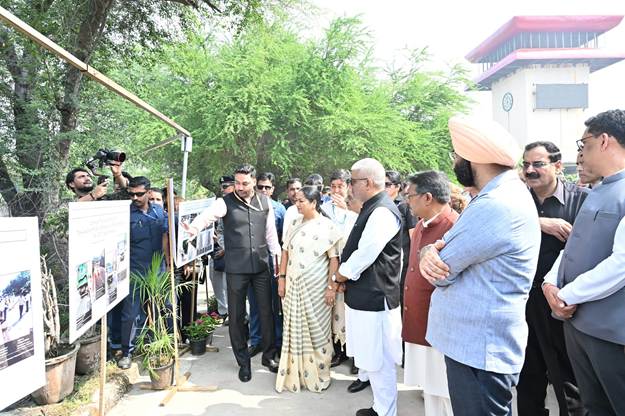
Ahead of Diwali, Union Minister for Environment, Bhupender Yadav, along with Chief Minister (NCT Delhi), Smt. Rekha Gupta, undertook a detailed on-ground review of the air pollution mitigation measures being undertaken by Government of NCT Delhi at the major hotspot of Anand Vihar.
A new Centre for Science and Environment (CSE) analysis reveals that early winter air pollution (October to mid-November) has worsened in 2026. "Diwali pollution is an annual tipping point, but elevated particulate levels before the festival this year show that baseline pollution is higher than in previous years," says Anumita Roychowdhury, Executive Director, Research and Advocacy, CSE.
"Year-round emission control across key sources remains inadequate. Had air quality been cleaner leading into winter, and episodic spikes from farm fires and firecrackers kept in check, seasonal weather shifts would not have triggered such severe pollution," she added.
"Delhi’s pre-winter pollution in 2026 was generally higher than in 2025, except for a brief late-September drop caused by rain. In both years, pollution surged in the days leading up to Diwali. However, the overall toxic burden during this pre-festive week was significantly worse in 2026 than in previous years," says Sharanjeet Kaur, deputy programme manager, Urban Lab, CSE.
BJP, AAP locked in political blame game
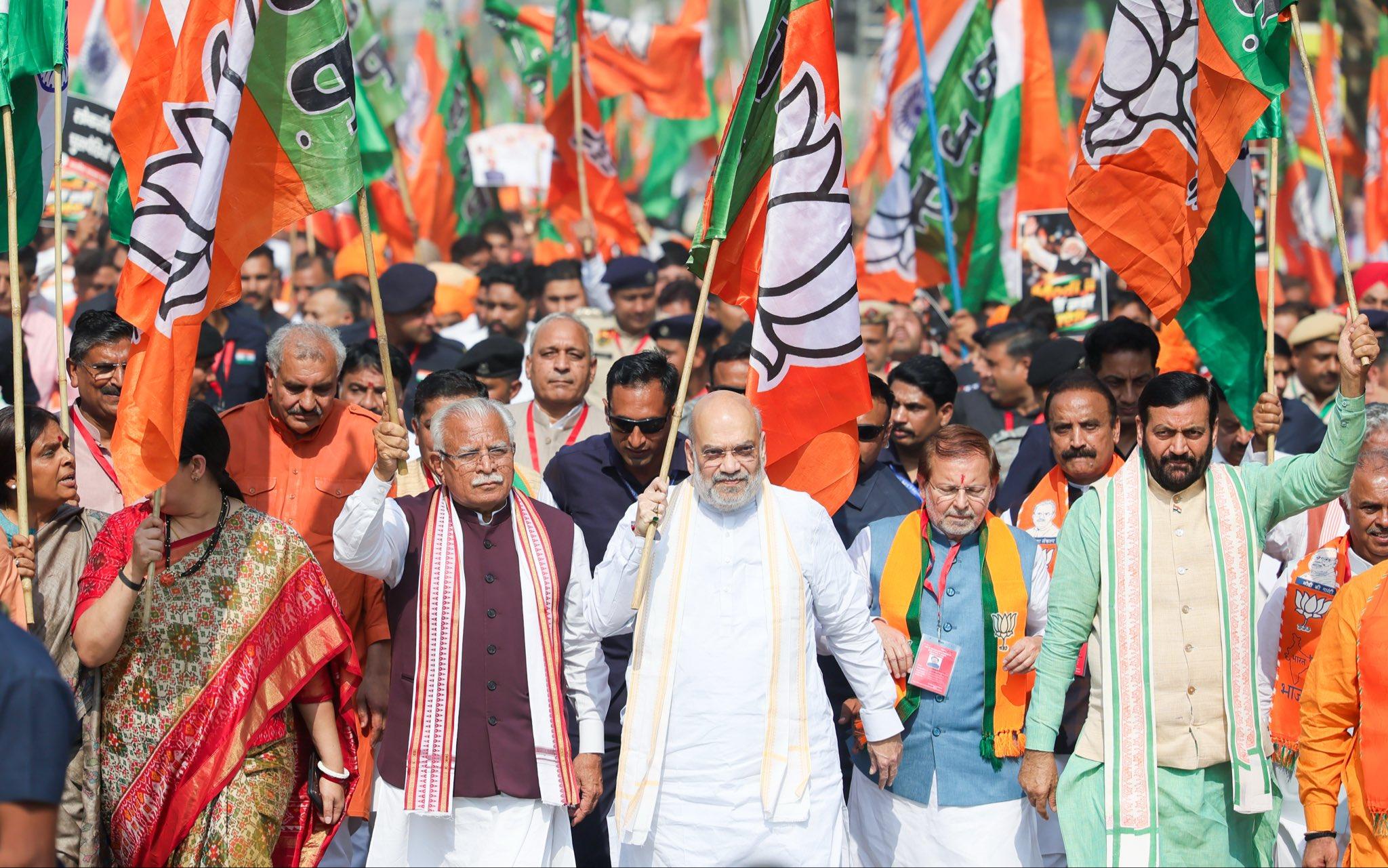
While Delhi people were suffering with alarming level of pollution, the main rival political parties in the Capital, both BJP and AAP were locked in political blame game. It may be recalled that last year, the BJP returned to power here after over 25 years, defeating over 10-year AAP regime.
The BJP government in the capital blamed the AAP government in the neighbouring state of Punjab, accusing Punjab of deliberate stubble fires.
Delhi Labour Minister Kapil Mishra alleged that “stubble fires were deliberately set off in Punjab on Diwali evening as part of a conspiracy against farmers, against Diwali, against Delhi, against Punjab”. But, he resisted from blaming Punjab farmers for the fires in view of forthcoming elections there. He accused that “people entered fields and set them ablaze while farmers were celebrating Diwali at home”.
“On November 7, stubble-burning incidents were reported at approximately 125 locations. How did the number suddenly rise to 1,200 locations on Diwali? How did the figures increase by more than 10 times? This is a matter of serious concern,” he alleged.
On the other hand, AAP’s media in-charge Baltej Pannu accused the BJP of targeting Punjab’s farmers and wondered that “when paddy harvesting had not even started in Punjab, BJP leaders in Delhi had started saying that smoke coming from Punjab had covered Delhi.”
Claiming that his government in Punjab made significant progress in checking stubble burning, he said “every day, one BJP leader or another comes forward with a new way to defame Punjab’s farmers. Punjab has almost brought stubble-burning incidents under control, yet the BJP continues to target the state.”
However, Uttar Pradesh Chief Minister Yogi Adityanath strongly defended bursting firecrackers and dismissed concerns over pollution caused by Diwali celebrations. He said "you must have noticed the hustle and bustle in the markets on Dhanteras. Many people claimed that Diwali caused pollution. Well, even if it did, it will eventually dissipate."
Traders say firecrackers are unfairly blamed for Delhi's pollution
Meanwhile, the Chamber of Trade and Industry (CTI) has strongly objected for holding Diwali firecrackers solely responsible for Delhi’s air pollution. It asserted that it requires year-round scientific-balanced measures rather than selective restrictions that affects traders' livelihoods.
In a statement, CTI Chairman Brijesh Goyal deplored that "firecrackers are being unfairly blamed for Delhi's pollution. While they do cause some smoke, their impact is temporary. Pollution levels are already high between October and January, even before Diwali, so stubble burning and other sources must also be addressed."
Addressing letters to political parties, CTI made it clear that it was against pollution, but at the same time opposing putting sole responsibility on Diwali crackers for worsening air quality in the city.
However, most alarmingly India's worsening air pollution crisis is no longer confined to national capital Delhi and its neighboring cities, but most of the northern cities facing severe concerns. According to air quality data tracked by AQI.in, 49 of the world's 50 most polluted cities were in India on the morning of November 10. The only city outside India was Lahore in Pakistan.
Sources
- Cover Photo: PIBpib.gov.in
- Delhi records most polluted Diwali in 5 yearsrediff.com
- Delhi’s Graded Response Action Plan (GRAP)caqm.nic.in
- Centre for Science and Environment (CSE)cseindia.org
- Delhi Pollution Control Committee (DPCC) Dataenglish.gujaratsamachar.com
- BJP and AAP blame gamendtv.com
- CTI on blaming firecrackerstimesofindia.indiatimes.com
- 49 of world’s 50 most polluted cities are in Indiatribuneindia.com
- Delhi recorded an AQI of 366 at 6:30 amindiatvnews.com
- CPCB monitors measuring only up to 1,000 µg/m³business-standard.com
- Kapil Mishra and Baltej Pannuindianexpress.com
Enjoyed this? Get new stories in your inbox.
One email on Mondays with the week's new stories. Free, and one click to unsubscribe.
About the writer

Freelance Journalist
A journalist by profession, worked with New Indian Express Group for a long time, besides some other media organizations, based in Hyderabad, presently a freelance journalist.
Writes about Journalism, Business, Politics, Education